

Self-employed taxpayers face increasingly complex filing requirements in 2026. While do-it-yourself tax software markets itself as cost-effective, research indicates that individuals with business income frequently leave substantial tax savings unclaimed when filing without professional assistance. TIG Tax Services has identified ten critical areas where DIY software falls short for independent contractors, freelancers, and small business owners.
1. Missed Deduction Opportunities Cost Thousands Annually
Professional tax preparers identify an average of 30-40% more eligible deductions than self-employed filers using software alone. Common overlooked deductions include home office expenses calculated using actual expense methods rather than simplified options, vehicle depreciation beyond standard mileage, and industry-specific deductions that generic software cannot recognize without specialized tax knowledge.
Self-employed individuals should maintain detailed records of all business expenses throughout the year. Categories frequently underutilized include professional development costs, business-related technology subscriptions, and qualified health insurance premiums.

2. Quarterly Estimated Tax Payment Errors Trigger Penalties
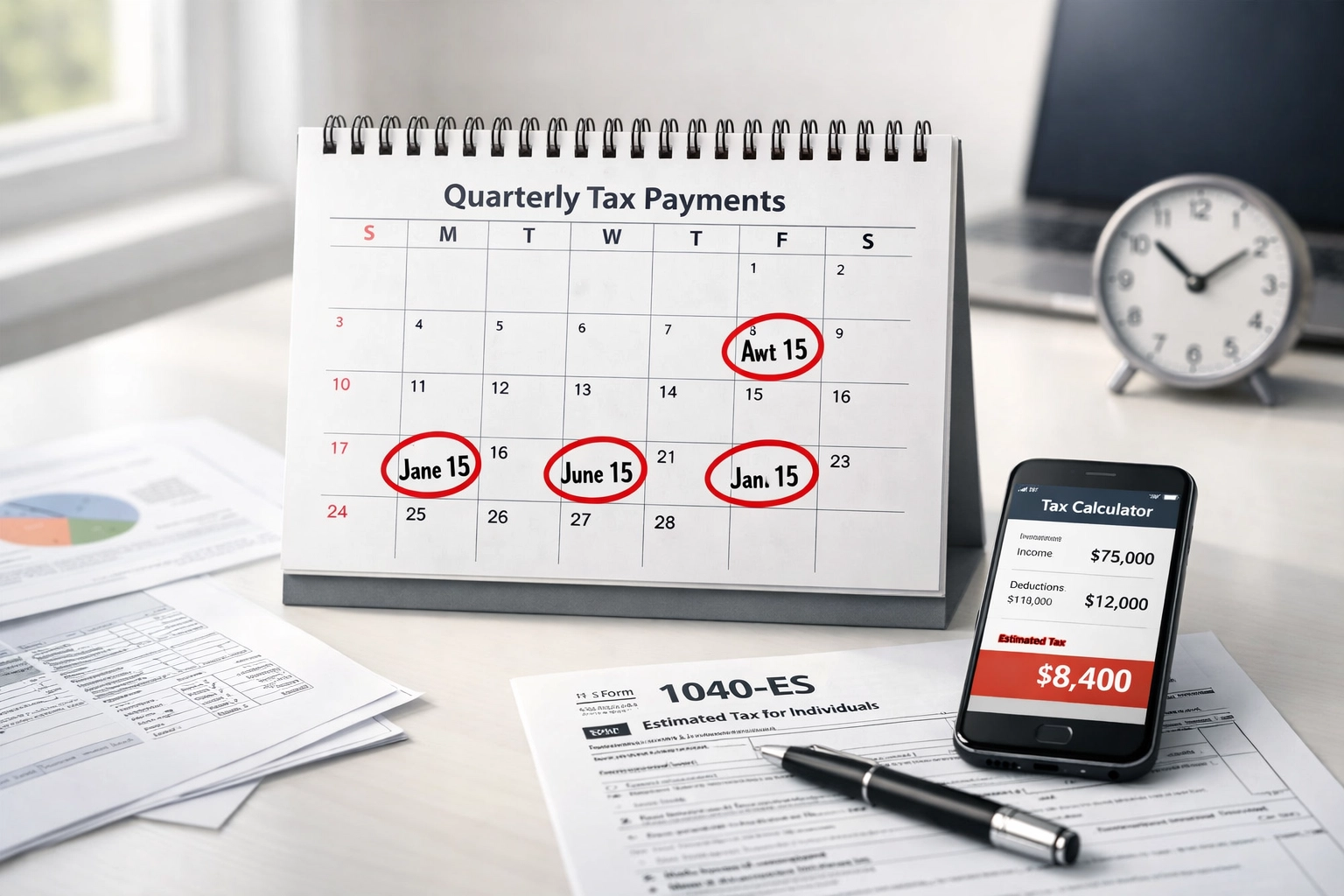
DIY software typically provides estimated tax calculations at year-end, but self-employed taxpayers must make quarterly payments to avoid underpayment penalties. The IRS assesses penalties when quarterly payments fall short of required thresholds, and software programs do not provide ongoing monitoring or adjustment recommendations as income fluctuates throughout the year.
Tax professionals calculate and adjust estimated payments quarterly, accounting for income variations, additional deductions discovered mid-year, and tax law changes that affect liability. This proactive approach prevents penalties that can reach 5-8% of underpaid amounts.
3. Business Entity Structure Receives Inadequate Guidance
Standard DIY platforms offer limited support for taxpayers operating as partnerships, S-Corporations, or multi-member LLCs. Research indicates that TaxAct provides superior partnership and S-Corp support compared to budget-friendly competitors, yet even premium software cannot replace strategic advice about optimal business structure selection.
Professional tax advisors evaluate whether a Schedule C sole proprietorship, LLC election, S-Corp status, or C-Corp structure provides maximum tax efficiency based on income levels, growth projections, and state-specific regulations. Business structure decisions create multi-year tax implications that automated software cannot adequately address.
4. Depreciation Calculations Require Specialized Knowledge
Self-employed filers with equipment purchases, vehicle acquisitions, or real property face complex depreciation calculations. Software may offer Section 179 expensing options, but determining whether to elect bonus depreciation, spread costs using MACRS schedules, or optimize depreciation timing requires analysis that extends beyond form completion.
Tax professionals evaluate depreciation strategies against current-year income, anticipated future earnings, and alternative minimum tax considerations. These calculations directly impact cash flow and tax liability across multiple years.
5. Multiple Income Streams Create Reporting Complications
Freelancers and contractors often receive income from various sources: 1099-NEC forms, 1099-K payment processor statements, direct client payments, and possibly W-2 wages from part-time employment. DIY software struggles with complex income reconciliation, particularly with the evolving 1099-K reporting thresholds.
The IRS has adjusted 1099-K reporting requirements multiple times, creating confusion about which transactions require reporting and how to avoid duplicate income recognition. Tax professionals track these regulatory changes and ensure accurate income reporting that prevents IRS notices while avoiding overpayment.
6. State Tax Obligations Multiply Complexity
Self-employed individuals working across state lines, maintaining clients in multiple jurisdictions, or relocating mid-year face state tax filing requirements that exponentially increase complexity. Software platforms charge additional fees for multiple state returns and provide limited guidance on apportionment rules, reciprocal agreements, and state-specific deductions.
Professional preparers navigate multi-state taxation, economic nexus thresholds for sales tax obligations, and state-level estimated payment requirements. This expertise prevents unexpected state tax liabilities and associated penalties.
7. Audit Risk Increases Without Professional Documentation Standards
The IRS audits self-employed taxpayers at rates significantly higher than W-2 employees. DIY filers often lack documentation that meets IRS substantiation requirements, particularly for home office deductions, vehicle expenses, and travel costs.
Tax professionals implement documentation systems that satisfy IRS requirements before returns are filed. This includes mileage logs formatted to agency specifications, contemporaneous expense records, and properly structured home office calculations. Professional preparation reduces audit likelihood and ensures successful defense if examination occurs.
8. Retirement Contribution Strategies Remain Underutilized
Self-employed individuals qualify for SEP-IRA, Solo 401(k), and other retirement plans offering larger contribution limits than traditional IRAs. DIY software identifies these options but cannot provide strategic guidance about contribution timing, plan type selection, or integration with spouse employment income.
Tax professionals calculate maximum allowable contributions, evaluate Roth versus traditional options, and time contributions to optimize both current-year deductions and long-term retirement planning. These decisions require analysis of projected income, tax bracket management, and estate planning considerations that exceed software capabilities.

9. Health Insurance Deductions Require Careful Calculation
Self-employed health insurance deductions appear straightforward but involve multiple limitation tests, interaction with other deduction categories, and coordination with premium tax credit eligibility. Software programs frequently misapply these limitations, resulting in either lost deductions or incorrect claims that trigger IRS correspondence.
Professional tax preparers verify health insurance deduction eligibility, calculate limitations based on net profit from specific business entities, and coordinate with Marketplace coverage to maximize combined benefits without creating conflicting claims.
10. Strategic Tax Planning Extends Beyond Annual Filing
DIY software focuses exclusively on reporting prior-year activity. Self-employed taxpayers benefit most from ongoing strategic planning that includes estimated tax monitoring, expense timing decisions, income acceleration or deferral strategies, and retirement contribution optimization throughout the year.
Tax professionals provide year-round guidance, quarterly consultations, and proactive recommendations that reduce lifetime tax liability rather than simply completing annual compliance forms. This strategic relationship creates substantially more value than the cost differential between DIY software and professional services.
How Self-Employed Taxpayers Can Fix These Issues
Individuals currently using DIY software should evaluate their tax situation against these ten factors. Those with business income exceeding $50,000 annually, multiple income sources, employees or contractors, or significant equipment investments typically benefit from professional tax preparation services.
TIG Tax Services offers specialized support for self-employed taxpayers, including quarterly estimated tax calculation, year-round consultation access, and strategic planning services. The firm maintains expertise in industry-specific deductions, multi-state taxation, and business entity optimization.
Taxpayers should gather prior-year returns, current-year income documentation, and expense records for professional review. Many self-employed individuals discover that previous DIY-filed returns contain errors or missed opportunities that can be corrected through amended returns, recovering thousands in overpaid taxes.
Taking Action Before the 2026 Filing Deadline
The 2026 tax filing season presents opportunities for self-employed taxpayers to establish professional relationships before deadlines create time pressure. Early engagement allows comprehensive return review, strategic planning for the remainder of 2026, and implementation of systems that simplify future compliance.
Self-employed individuals should schedule consultations with qualified tax professionals to evaluate whether their current DIY approach adequately serves their financial interests. The investment in professional tax services typically generates returns many times the cost through increased deductions, penalty avoidance, and strategic tax planning.
For more information about professional tax preparation services for self-employed taxpayers, contact TIG Tax Services to schedule a consultation. The firm provides free initial assessments to evaluate potential tax savings and service benefits.