

E-commerce sellers operating on platforms like Etsy and Shopify face distinct tax obligations that differ significantly from traditional brick-and-mortar businesses. The complexity of managing sales tax collection, tracking inventory costs, and calculating self-employment tax creates challenges for many online entrepreneurs. Understanding these requirements and implementing proper record-keeping systems can prevent costly errors and ensure compliance with federal and state tax regulations.
Understanding Sales Tax Obligations for Online Marketplaces
Sales tax management represents one of the most significant areas of confusion for e-commerce sellers. The landscape has evolved considerably in recent years, particularly with marketplace facilitator laws that shift collection responsibilities to platforms rather than individual sellers.
Etsy's Marketplace Facilitator Role
Etsy automatically collects and remits sales tax on behalf of sellers in states where it operates as a marketplace facilitator. Sellers cannot opt out of this system. The platform reports collected sales tax amounts in the Payment account Activity Summary, providing transparency for tax preparation purposes. This automated system reduces the administrative burden on sellers for transactions processed through Etsy Payments.
However, sellers must remain vigilant about transactions occurring outside of Etsy's marketplace facilitator coverage. If a seller establishes sales nexus with states where Etsy does not manage sales tax collection, the responsibility falls on the individual business owner. In these situations, sellers must obtain state sales tax permits and file returns directly with state tax authorities or through third-party software solutions.

Shopify Sales Tax Considerations
Shopify sellers face similar obligations but with different platform-specific mechanisms. Sellers should verify their sales tax collection settings within their Shopify admin panel and ensure proper configuration for each state where they have nexus. Nexus can be established through various factors, including physical presence, economic thresholds, or inventory storage locations.
Income and Self-Employment Tax Requirements
E-commerce sellers must report all gross sales income on their federal tax returns, regardless of whether they receive Form 1099-K from payment processors. The threshold for receiving Form 1099-K has undergone recent changes:
Form 1099-K Reporting Thresholds
- Tax Year 2024: Sellers with $5,000 or more in gross payments through Etsy Payments receive Form 1099-K (no transaction count requirement)
- Tax Year 2025 and beyond: The threshold increases to 200 or more transactions AND $20,000 or more in gross payments
These thresholds do not exempt sellers from reporting obligations. All income must be reported, even if it falls below the 1099-K threshold.
Self-Employment Tax Calculations
Sellers with net self-employment income of $400 or more must pay self-employment tax at a rate of 15.3% of net profit. This rate consists of:
- 12.4% for Social Security contributions
- 2.9% for Medicare contributions
Self-employment tax applies separately from income tax and is calculated on profits after deducting legitimate business expenses. This creates a dual tax obligation that many new sellers underestimate when projecting their tax liability.

Essential Tax Forms for E-Commerce Sellers
E-commerce businesses typically require three primary federal tax forms:
Form 1040: U.S. Individual Income Tax Return
The standard personal income tax return serves as the foundation document where all business income and taxes are ultimately reported.
Schedule C: Profit or Loss from Business
Schedule C captures detailed business income and expense information. Sellers with straightforward operations and business expenses of $5,000 or less (with no net loss) may qualify to use Schedule C-EZ, a simplified version of the form. Schedule C requires sellers to report:
- Gross receipts or sales
- Returns and allowances
- Cost of goods sold
- Gross profit
- All business expense categories
- Net profit or loss
Schedule SE: Self-Employment Tax
This form calculates the self-employment tax obligation based on net earnings from self-employment. The form applies the 15.3% rate to net profit and determines the exact tax owed.
Maximizing Business Deductions for Online Sellers
Proper expense tracking and deduction claiming can substantially reduce taxable income for e-commerce businesses. Eligible business expenses include:
Platform and Transaction Fees
- Etsy listing fees, transaction fees, and payment processing fees
- Shopify monthly subscription costs
- PayPal or other payment processor charges
- Third-party app subscriptions for inventory management or marketing
Product and Inventory Costs
- Raw materials and supplies for handmade goods
- Wholesale inventory purchases for resellers
- Packaging materials, boxes, tissue paper, and branded materials
- Shipping supplies including tape, labels, and cushioning materials

Marketing and Business Development
- Paid advertising on social media platforms, Google Ads, or Etsy Promoted Listings
- Professional photography equipment and services for product images
- Website hosting and domain registration fees
- Business cards, branding materials, and promotional items
Home Office Deduction
Sellers who maintain a dedicated workspace exclusively for business activities may qualify for the home office deduction. This deduction can be calculated using either the simplified method ($5 per square foot, up to 300 square feet) or the actual expense method, which requires detailed record-keeping of home expenses.
Equipment and Technology
- Computers, tablets, and smartphones used for business operations
- Printers, label makers, and shipping scales
- Software subscriptions for accounting, design, or inventory management
- Camera equipment for product photography
Vehicle and Travel Expenses
Business-related vehicle use for purchasing supplies, shipping packages, or attending trade shows qualifies for deduction. Sellers can choose between the standard mileage rate or actual expense method for vehicle deductions.
Inventory and Record-Keeping Best Practices
Accurate inventory tracking and comprehensive record-keeping form the foundation of proper tax compliance for e-commerce sellers.
Inventory Management Systems
Sellers should implement systems to track:
- Beginning inventory value at the start of each tax year
- Inventory purchases throughout the year with corresponding costs
- Cost of goods sold as products are sold
- Ending inventory value at year-end
Inventory costs directly impact the cost of goods sold calculation, which reduces gross income on Schedule C. Proper inventory accounting ensures sellers do not overpay taxes by failing to claim legitimate inventory costs.
Separate Business Banking
Maintaining a dedicated business bank account and business credit card creates clear separation between personal and business finances. This separation simplifies record-keeping, facilitates expense tracking, and provides documentary evidence in the event of an audit.
Receipt and Documentation Retention
The IRS recommends retaining tax records for at least three years from the date of filing. E-commerce sellers should maintain:
- Bank and credit card statements
- Receipts for all business purchases
- Invoices and sales records
- Platform payment reports and 1099-K forms
- Mileage logs for vehicle expenses
- Home office measurement documentation
Digital record-keeping solutions, including receipt scanning apps and cloud-based accounting software, provide secure, organized storage for tax documentation.
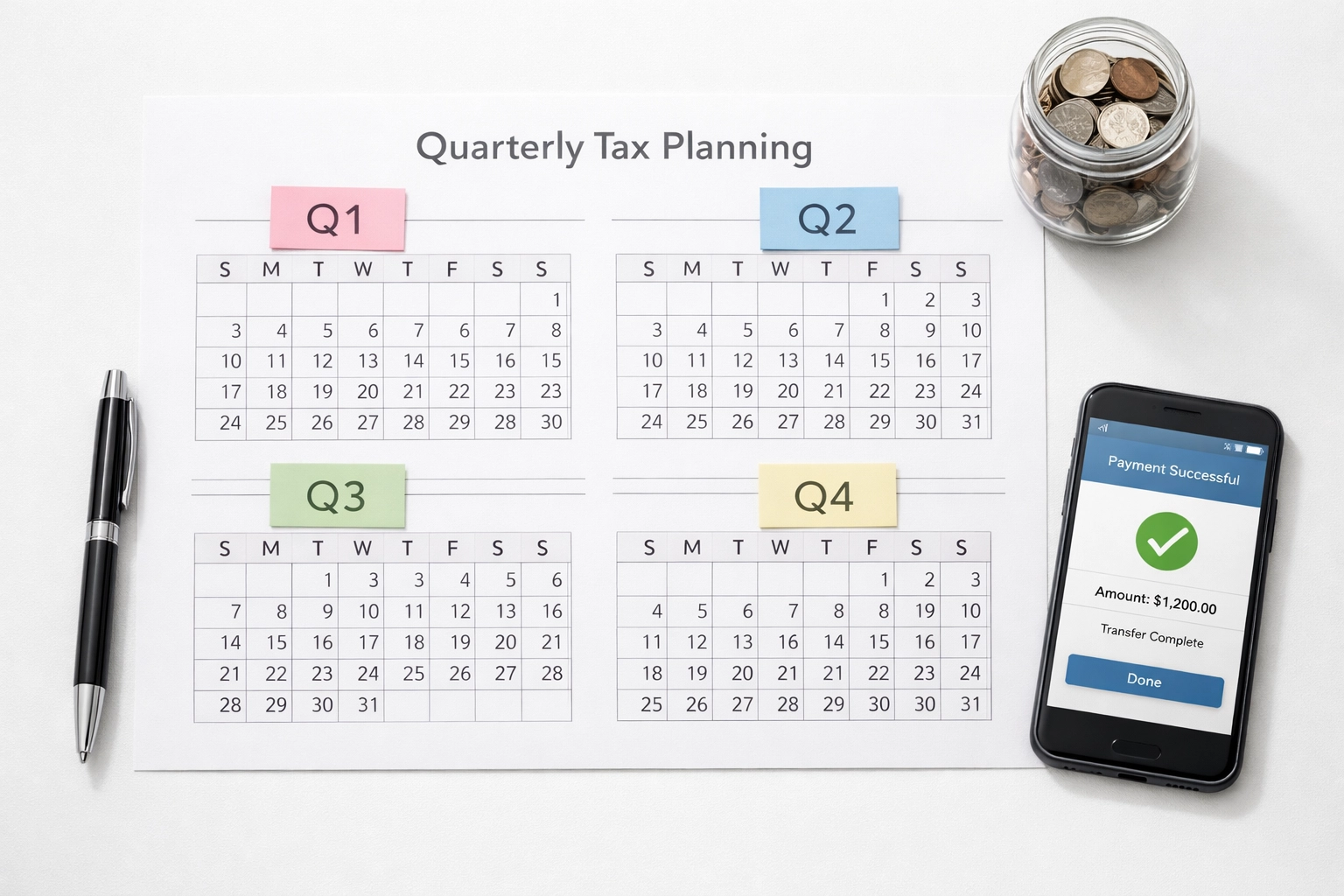
Quarterly Estimated Tax Payments
Sellers who expect to owe $1,000 or more in taxes for the year must make quarterly estimated tax payments to avoid underpayment penalties. The IRS requires estimated payments on the following schedule:
- Quarter 1: April 15
- Quarter 2: June 15
- Quarter 3: September 15
- Quarter 4: January 15 of the following year
Estimated tax payments should cover both income tax and self-employment tax obligations. Sellers can calculate estimated payments using Form 1040-ES or through the IRS payment portal. Setting aside 25-30% of net profit throughout the year helps ensure sufficient funds for quarterly payments and year-end tax obligations.
Professional Tax Assistance for E-Commerce Businesses
The complexity of e-commerce tax obligations makes professional assistance valuable for many sellers. Tax professionals familiar with online business operations can provide guidance on:
- Proper business structure selection (sole proprietorship, LLC, S-corporation)
- Sales tax nexus determination and compliance strategies
- Inventory accounting method selection
- Deduction optimization
- Multi-state tax filing requirements
- Audit representation and support
TIG Tax Services specializes in tax preparation for self-employed individuals and small business owners navigating the unique challenges of e-commerce taxation. Professional tax assistance ensures compliance with current regulations while maximizing legitimate deductions that reduce overall tax liability.
E-commerce sellers who implement organized record-keeping systems, understand their tax obligations, and seek professional guidance when necessary position themselves for long-term business success. Proactive tax planning throughout the year eliminates last-minute scrambling during tax season and provides clear financial visibility for business decision-making.
For personalized assistance with e-commerce tax preparation and planning, taxpayers can contact TIG Tax Services at https://tigtaxservices.com to schedule a consultation with experienced tax professionals.