

As the professional landscape continues to evolve in 2026, the Internal Revenue Service (IRS) maintains rigorous standards for taxpayers claiming the home office deduction. While remote and hybrid work models remain prevalent, the eligibility criteria for these tax benefits are often misunderstood. TIG Tax Services provides this comprehensive guide to assist taxpayers in navigating the complexities of home office expenses and ensuring full regulatory compliance.
According to Richard Terry, President and CEO of TIG Tax Services, "Taxpayers must recognize that the home office deduction is one of the most scrutinized areas of a tax return. Precision in calculation and strict adherence to the exclusive-use rule are paramount to maintaining a defensible tax position."
To ensure accuracy and avoid potential audits, individuals should review the following seven common mistakes associated with home office deductions in 2026.
1. Assuming Standard Remote Work Automatically Qualifies
One of the most frequent misconceptions is that any individual working from home is eligible for a deduction. However, the IRS distinguishes between employees and self-employed individuals or independent contractors. Under current federal tax laws, employees who receive a W-2 are generally prohibited from claiming home office deductions on their federal returns. This restriction has remained a point of contention since the Tax Cuts and Jobs Act, and it continues to apply in 2026.
Only individuals with self-employment income: including freelancers, gig workers, and small business owners: can typically qualify for this deduction. Taxpayers should consult the TIG Tax Services Taxpayer Checklist to determine if their specific employment status permits these claims.
2. Neglecting the Exclusive-Use Requirement
The Internal Revenue Service mandates that the designated area of the home must be used exclusively for business purposes. This requirement is absolute and does not allow for dual-purpose spaces.
Common errors include:
- Utilizing a kitchen table that is also used for family meals.
- Claiming a guest bedroom that occasionally houses visitors.
- Conducting business in a living room where personal entertainment occurs.
To meet the "exclusive use" test, the area must be a dedicated space where no personal activities take place. If a taxpayer uses a portion of a room for business, they must be able to clearly define that specific area and prove that it is used solely for work-related tasks.

3. Believing a Separate Room is Mandatory
Conversely, some taxpayers fail to claim a legitimate deduction because they believe the office must be a separate, walled-off room. This is inaccurate. A "clearly identifiable space" can qualify even if it is not a full room.
For example, a specific corner of a studio apartment or a partitioned area in a larger room can satisfy the requirements, provided the "exclusive use" rule mentioned above is maintained. Taxpayers should accurately measure the square footage of this specific area rather than guessing the dimensions, as inconsistent measurements are a frequent red flag for the IRS.
4. Misunderstanding Renter Eligibility
There is a recurring myth that only homeowners can benefit from home office deductions. In reality, individuals who rent their primary residence are also eligible to deduct a portion of their housing costs.
Renters may calculate the percentage of their home used for business and apply that same percentage to:
- Monthly rent payments.
- Utility bills (electricity, water, heating).
- Renters insurance.
- Internet and communication services.
It is imperative that renters maintain a copy of their lease agreement and utility statements as part of their permanent tax records. For further guidance on documentation, taxpayers may visit the TIG Tax Services contact page to speak with a professional.
5. Using Inaccurate Square Footage Calculations
When utilizing the Actual Expense Method, taxpayers must determine the exact percentage of the home used for business. This is typically done by dividing the square footage of the office area by the total square footage of the residence.
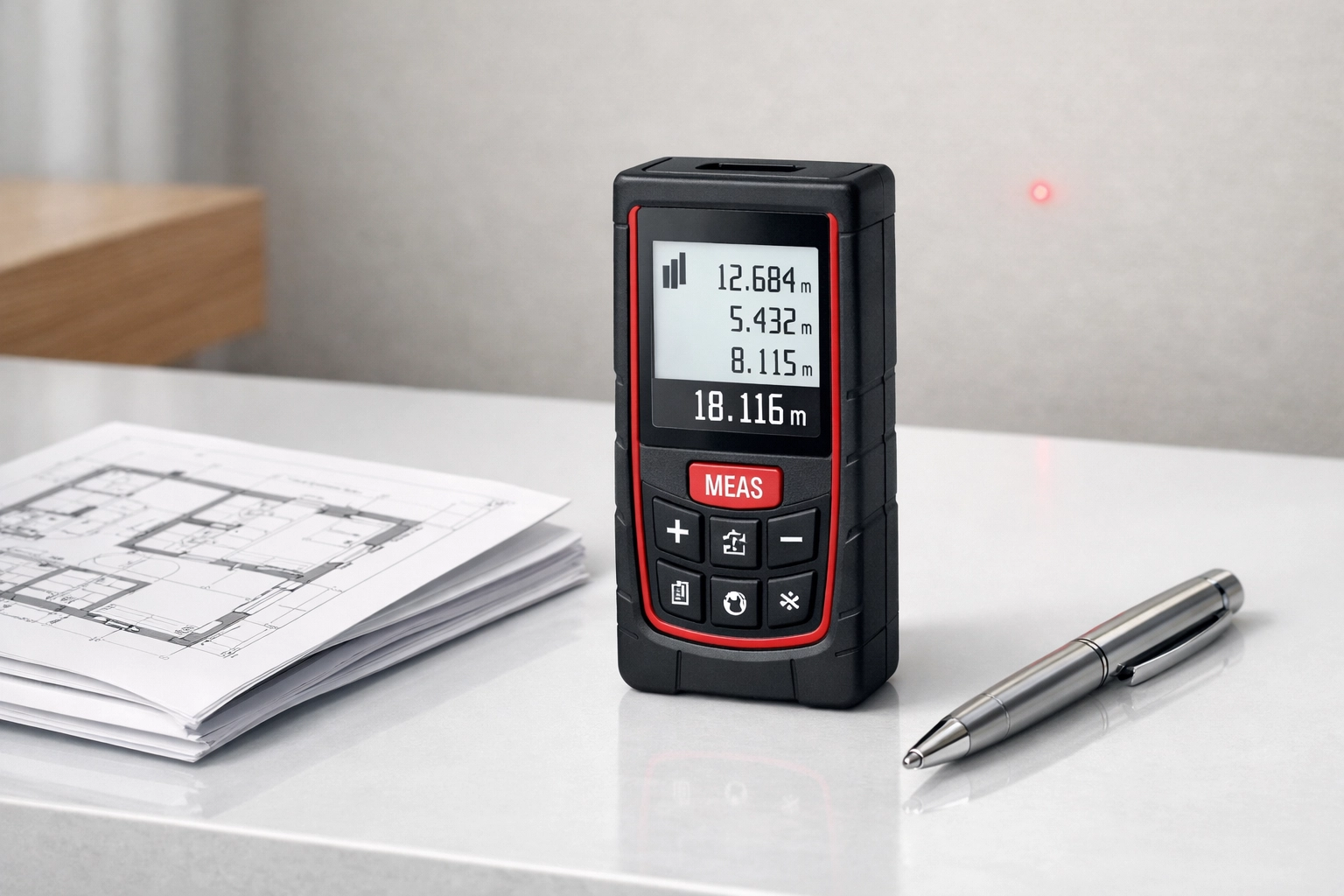
A common mistake is inflating the size of the office or rounding up the percentage. For instance, claiming that a small desk in a 2,000-square-foot home constitutes 25% of the total area is a statistical anomaly that will likely trigger an inquiry. TIG Tax Services recommends using a laser measure or professional floor plan to establish precise figures.
6. Failing to Choose the Optimal Deduction Method
The IRS offers two primary methods for calculating the home office deduction: the Simplified Method and the Actual Expense Method. Failing to compare these can result in a significantly lower deduction.
The Simplified Method
- Standard Rate: Currently $5 per square foot of the home used for business.
- Maximum Limit: Up to 300 square feet ($1,500 maximum deduction).
- Documentation: Requires less record-keeping but may result in a smaller tax benefit for those in high-cost-of-living areas.
The Actual Expense Method
- Calculation: Based on the actual percentage of home expenses.
- Eligible Costs: Mortgage interest, insurance, utilities, repairs, and depreciation.
- Documentation: Requires exhaustive record-keeping, including receipts and canceled checks.
Taxpayers must evaluate which method yields the greatest benefit based on their specific financial situation. Detailed updates on rate changes can be found at TIG Tax Services Tax Updates.
7. Inadequate Record-Keeping and Documentation
Weak documentation remains the leading cause of disallowed deductions during an IRS audit. Taxpayers must be prepared to prove both the necessity of the home office and the accuracy of the expenses claimed.
Essential documentation includes:
- Photographic Evidence: Digital photos of the workspace showing it is used exclusively for business.
- Expense Logs: A structured ledger of all utility payments and home maintenance costs.
- Proof of Income: Records showing that the home is the principal place of business where the taxpayer meets clients or conducts administrative tasks.
- Form 8829: For those using the actual expense method, this form must be filed with Schedule C.

To mitigate the risk associated with these filings, TIG Tax Services offers ProtectionPlus, an audit assistance service that provides taxpayers with professional support in the event of an IRS inquiry. This service ensures that clients have expert representation to defend their legitimate deductions.
The Importance of Professional Consultation
The landscape of tax law is subject to frequent updates. For instance, recent IRS reminders regarding disaster area extensions or changes in partnership basis shifting can impact how business owners report income and expenses. Taxpayers should stay informed by reviewing the latest IRS Modernized e-File (MeF) business return reminders and other regulatory updates.
"Our goal at TIG Tax Services is to simplify the complex," says Richard Terry. "By avoiding these seven common mistakes, taxpayers can confidently claim the deductions they are entitled to while remaining in full compliance with the law."
Summary of Compliance Steps
To ensure a compliant 2026 tax filing, taxpayers should adhere to the following checklist:
- Verify Eligibility: Ensure you have self-employment income and that the home is your principal place of business.
- Measure Precisely: Define the office space and calculate its percentage of the total home square footage.
- Apply the Exclusive-Use Test: Remove all personal items and non-work-related furniture from the designated area.
- Compare Methods: Run the numbers for both the Simplified and Actual Expense methods.
- Secure Records: Maintain all receipts, utility bills, and proof of residence in a secure digital format.
For those requiring professional assistance with their 2026 filings, TIG Tax Services provides comprehensive tax preparation services tailored to the needs of small business owners and independent contractors. Detailed information regarding our services and corporate policies can be found on our Privacy Policy and Terms and Conditions pages.
Properly claiming a home office deduction requires diligence and a thorough understanding of current IRS regulations. By avoiding the pitfalls of overestimation and poor documentation, you can maximize your tax savings while minimizing your risk. For more information on preparing for the upcoming season, visit Get Ready for Tax Filing Season.