

Freelancers and independent contractors face unique tax obligations that differ significantly from traditional employees. Quarterly estimated tax payments represent one of the most critical responsibilities for self-employed individuals, yet many freelancers struggle to understand when, how, and how much to pay. The Internal Revenue Service requires these advance payments because freelancers do not have taxes automatically withheld from their income throughout the year.
What Are Quarterly Estimated Taxes
Quarterly estimated taxes are advance payments made to the Internal Revenue Service four times per year by individuals who do not have taxes withheld from their income. These payments cover both federal income tax and self-employment tax, which includes Social Security and Medicare contributions that employers typically handle for traditional employees.
The self-employment tax rate stands at 15.3% of net self-employment earnings, covering both the employer and employee portions of Social Security (12.4%) and Medicare (2.9%) taxes. Freelancers must pay this entire amount themselves, unlike traditional employees who split these costs with their employers.

Who Must Pay Quarterly Estimated Taxes
The Internal Revenue Service requires quarterly estimated tax payments from individuals who expect to owe $1,000 or more in taxes when filing their annual return. Additionally, taxpayers must make these payments if their withholding and tax credits will be less than either 90% of their current year's tax liability or 100% of their previous year's tax liability.
High-income earners face stricter requirements. Individuals whose prior year's adjusted gross income exceeded $150,000 must pay either 90% of their current year's tax liability or 110% of their previous year's tax liability to avoid penalties.
Common Freelance Situations Requiring Quarterly Payments
- Independent contractors receiving Form 1099-NEC
- Freelance writers, designers, and consultants
- Ride-share drivers and delivery workers
- Online business owners and e-commerce sellers
- Real estate agents working as independent contractors
- Professional service providers including attorneys, doctors, and accountants operating as sole proprietors
Calculating Your Quarterly Tax Payments
Determining the correct quarterly payment amount requires careful calculation of multiple tax components. The process involves estimating annual income, calculating applicable taxes, and dividing the total by four quarterly payments.

Step-by-Step Calculation Process
Step 1: Estimate Annual Self-Employment Income
Review previous year's earnings and project current year income based on contracts, client relationships, and market conditions. Consider seasonal fluctuations and potential new business opportunities.
Step 2: Calculate Net Business Income
Subtract legitimate business deductions from gross income, including:
- Home office expenses
- Professional equipment and software
- Business travel and transportation costs
- Professional development and training
- Marketing and advertising expenses
- Professional services and legal fees
Step 3: Determine Self-Employment Tax
Calculate self-employment tax at 15.3% of net self-employment earnings up to the Social Security wage base of $176,100 for 2025. Earnings above this threshold are subject to the Medicare portion only (2.9%).
Step 4: Calculate Federal Income Tax
Apply current tax brackets to estimated taxable income after accounting for standard deduction or itemized deductions. Consider applicable tax credits that may reduce overall liability.
Step 5: Factor Additional Medicare Tax
High earners must account for Additional Medicare Tax of 0.9% on self-employment income exceeding $200,000 for single filers or $250,000 for married couples filing jointly.
Step 6: Divide Total Tax by Four
Sum all tax components and divide by four to determine each quarterly payment amount.
Practical Payment Strategy
Many tax professionals recommend freelancers set aside approximately 30% of gross income in a dedicated tax savings account. This percentage typically covers federal income tax, self-employment tax, and state tax obligations, providing a buffer for quarterly payments and annual filing requirements.
Quarterly Payment Deadlines and Schedule
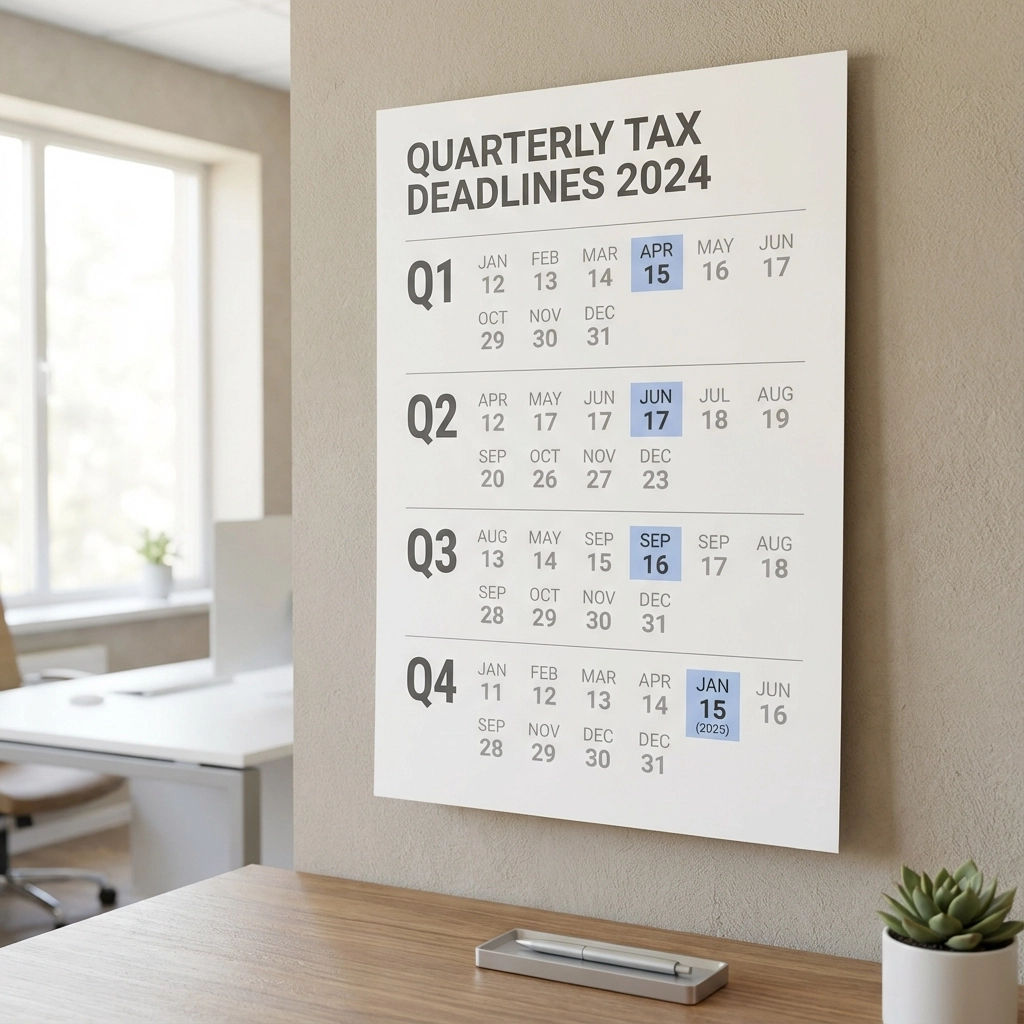
The Internal Revenue Service establishes specific deadlines for quarterly estimated tax payments that do not align with calendar quarters. Missing these deadlines can result in penalties and interest charges, even if taxpayers ultimately receive refunds when filing annual returns.

2025 Quarterly Payment Schedule
- First Quarter (January-March): Due April 15, 2025
- Second Quarter (April-May): Due June 16, 2025
- Third Quarter (June-August): Due September 15, 2025
- Fourth Quarter (September-December): Due January 15, 2026
Important Deadline Considerations
Payment deadlines that fall on weekends or federal holidays are extended to the next business day. Taxpayers can make payments online through the Electronic Federal Tax Payment System, by phone, or by mailing Form 1040ES with a check or money order.
The Internal Revenue Service processes payments made by the deadline date, not the postmark date, for electronic payments. Mailed payments must be postmarked by the deadline date to avoid late payment penalties.
Safe Harbor Rules and Penalty Avoidance
The Internal Revenue Service provides safe harbor rules that protect taxpayers from underpayment penalties, even when quarterly payments do not precisely match actual tax liability. Understanding these rules helps freelancers avoid costly penalties while managing cash flow effectively.
Safe Harbor Protection Requirements
Taxpayers avoid underpayment penalties by meeting one of the following conditions:
Current Year Safe Harbor: Pay at least 90% of current year's total tax liability through quarterly payments and withholding combined.
Prior Year Safe Harbor: Pay at least 100% of previous year's total tax liability (110% for high-income earners with prior year adjusted gross income exceeding $150,000).
De Minimis Rule: Owe less than $1,000 in tax after subtracting withholding and credits.
Flexible Payment Strategies
Freelancers can adjust quarterly payment amounts based on actual income fluctuations throughout the year. The annualized income installment method allows taxpayers to base each payment on actual income earned during the specific quarter, rather than projecting equal amounts.
This flexibility particularly benefits freelancers with seasonal income patterns or those experiencing significant income changes due to new contracts, project completions, or economic conditions.
Common Mistakes and How to Avoid Them
Many freelancers encounter preventable errors when managing quarterly estimated taxes. Understanding these common pitfalls helps ensure compliance and minimizes penalty risks.
Underestimating Income and Tax Liability
New freelancers often underestimate their annual income and corresponding tax obligations. Conservative estimates can lead to underpayment penalties, while aggressive projections may create cash flow challenges.
Forgetting State Tax Obligations
Most states with income taxes require quarterly estimated payments separate from federal obligations. Freelancers must research their state's requirements and payment schedules, which may differ from federal deadlines.
Missing Payment Deadlines
Late quarterly payments trigger immediate penalty calculations, even when annual returns result in refunds. Setting calendar reminders and automating payments help ensure timely compliance.
Inadequate Record Keeping
Poor documentation of business income and expenses complicates accurate tax calculations and may result in missed deductions or audit complications.
Professional Tax Assistance for Freelancers
Managing quarterly estimated taxes requires ongoing attention to changing income levels, tax law updates, and complex calculation requirements. Professional tax services provide valuable expertise for freelancers navigating these responsibilities.

TIG Tax Services specializes in helping freelancers and independent contractors manage their quarterly estimated tax obligations effectively. Professional guidance ensures accurate calculations, timely payments, and strategic tax planning that minimizes overall liability while maintaining compliance.
Experienced tax professionals can assist with:
- Accurate quarterly payment calculations based on projected income
- Strategic deduction planning to reduce overall tax burden
- State tax requirement coordination
- Penalty avoidance strategies and safe harbor compliance
- Year-end tax planning and preparation
When to Seek Professional Help
Freelancers should consider professional tax assistance when experiencing significant income changes, expanding business operations, or facing complex tax situations involving multiple income streams or state jurisdictions. Early consultation prevents costly mistakes and ensures optimal tax strategies.
Professional tax preparation services become particularly valuable for freelancers earning substantial income, those with complex business structures, or individuals managing both freelance work and traditional employment simultaneously.
Preparing for Success with Quarterly Taxes
Effective quarterly estimated tax management requires systematic planning, consistent record keeping, and regular income monitoring. Freelancers who establish proper systems early in their careers avoid common pitfalls and maintain healthy cash flow while meeting tax obligations.
Regular consultation with qualified tax professionals ensures freelancers stay current with changing tax laws, maximize available deductions, and implement strategies that support both compliance and business growth objectives.
For comprehensive assistance with quarterly estimated taxes and ongoing tax planning, freelancers can rely on TIG Tax Services to provide expert guidance tailored to their specific business needs and financial goals.