

Small business owners face a critical decision window in 2026 regarding renewable energy investments. Federal tax incentives for solar installations and electric vehicle charging infrastructure are approaching statutory deadlines, creating a finite opportunity for businesses to capture substantial tax benefits before these programs expire or phase down significantly.
The Commercial Solar Investment Tax Credit: Time-Sensitive Opportunity
The federal Investment Tax Credit (ITC) for commercial solar installations remains available at 30 percent of the total system cost for qualifying small businesses. This baseline credit applies to solar photovoltaic systems with a capacity under 1 MW AC power, covering most small business installations including rooftop arrays and ground-mounted systems.

Business owners should understand that this credit can increase substantially through additional incentive adders. Projects meeting specific criteria can achieve a combined credit rate of up to 70 percent through three enhancement pathways:
- Energy Communities Bonus: An additional 10 percent for projects located in qualifying energy communities, typically former coal or fossil fuel production areas
- Domestic Content Bonus: An additional 10 percent when using solar equipment manufactured primarily in the United States
- Low-Income Communities Bonus: An additional 20 percent for installations serving or located in designated low-income areas
The critical factor governing all commercial solar credits is the project timeline. To qualify for the 30 percent base credit, businesses must either begin construction by July 4, 2026, or complete full installation by December 31, 2027. Projects that miss the July 2026 construction commencement deadline face a compressed timeline, requiring completion within the 2027 calendar year to maintain eligibility.
Combining Tax Credits with Accelerated Depreciation
Beyond the direct tax credit, commercial solar investments qualify for bonus depreciation, creating a dual tax benefit strategy. After claiming the Investment Tax Credit, businesses can depreciate approximately 80 to 85 percent of the system's total cost in the first year of operation.
This combination produces significant first-year tax advantages. A small business installing a $100,000 solar system that qualifies for the 30 percent ITC would receive a $30,000 tax credit. The remaining depreciable basis of approximately $85,000 could then generate an additional depreciation deduction in year one, substantially improving cash flow and reducing the effective cost of the installation.
Financial modeling for these investments should account for both benefits simultaneously. The accelerated depreciation provision amplifies the return on investment beyond the upfront credit, making 2026 installations particularly advantageous from a tax planning perspective.
Electric Vehicle Charging Infrastructure Credit Deadline
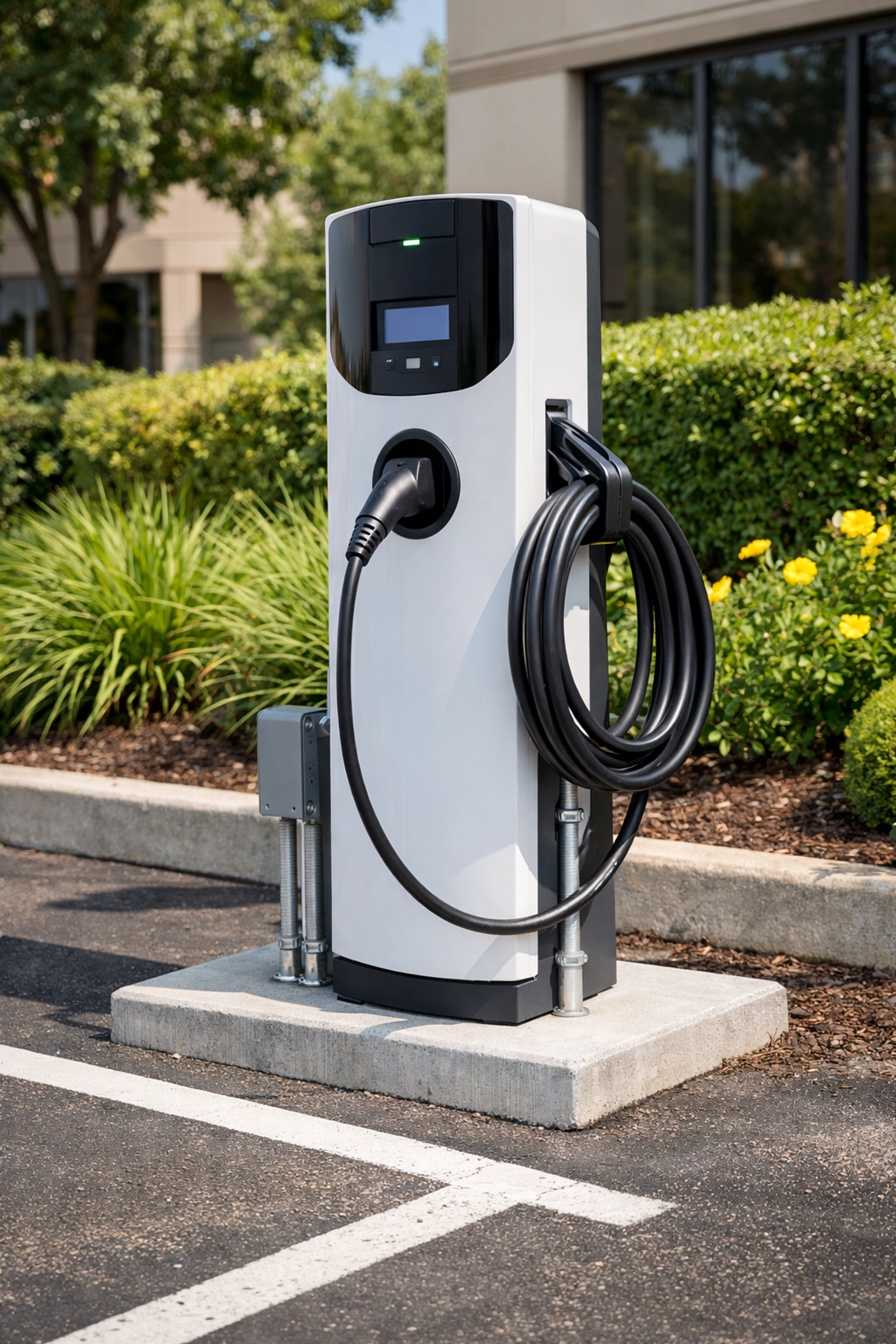
The Alternative Fuel Vehicle Refueling Property Credit (30C) represents the second time-sensitive opportunity for small businesses in 2026. This federal tax credit covers 30 percent of the cost to purchase and install qualifying electric vehicle charging equipment, with the program expiring on June 30, 2026.
Unlike the solar ITC, which extends into 2027 for projects meeting construction commencement requirements, the EV charging credit has a hard midyear deadline. Businesses planning to install charging stations must complete both purchase and installation by June 30 to qualify for federal tax benefits.
The credit applies to both the equipment cost and professional installation expenses, including electrical work, trenching, and necessary infrastructure upgrades. Small businesses operating vehicle fleets or providing customer parking should evaluate whether this six-month window provides sufficient time for project planning, permitting, and installation.
Strategic Integration: Pairing Solar with EV Charging
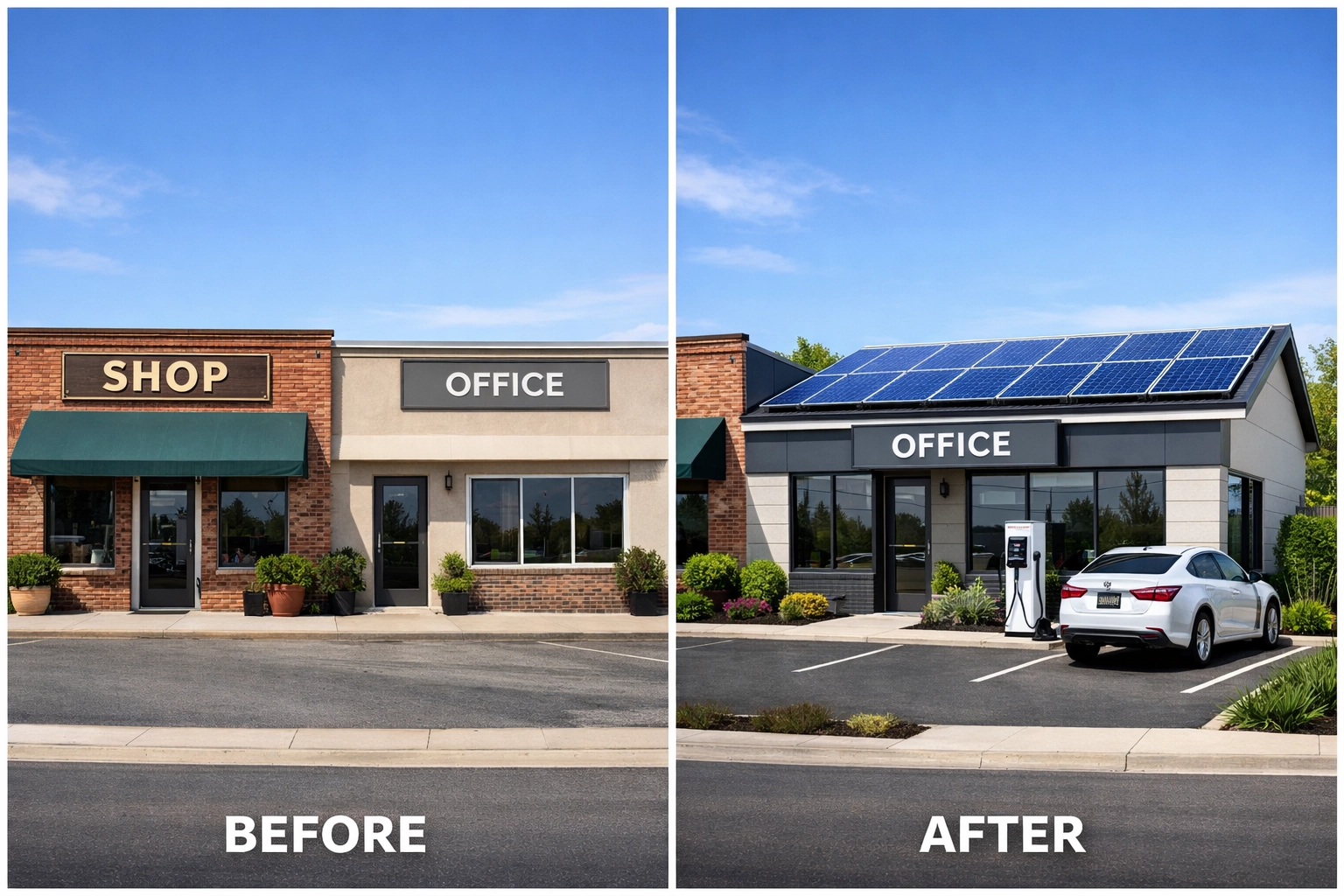
Small businesses contemplating both solar and EV charging installations should consider integrated project timelines. Installing EV charging infrastructure during a solar construction project can reduce overall costs through shared electrical work, trenching, and permitting processes.
The strategic approach involves:
- Initiating solar project planning immediately to meet the July 4, 2026 construction commencement deadline
- Coordinating EV charging installation to complete before the June 30, 2026 credit expiration
- Leveraging shared contractor relationships and site work to reduce total installation costs
- Optimizing electrical infrastructure to support both systems efficiently
This integrated approach maximizes total federal tax incentive capture while minimizing redundant construction costs and site disruption.

The Residential Credit Comparison: Why Business Credits Matter More Now
The landscape for renewable energy tax credits shifted significantly on December 31, 2025, when the residential solar tax credit expired. Homeowners no longer have access to the 30 percent federal credit that previously incentivized residential installations.
This policy change creates a divergence between residential and commercial renewable energy economics. Small business owners retain access to federal incentives that individual homeowners have lost, making business-owned solar installations comparatively more attractive from a tax perspective in 2026.
Business owners operating from home offices or considering property improvements should carefully evaluate whether qualifying improvements can be structured as business assets rather than personal property to maintain eligibility for commercial credits.
What Happens After 2026: The Post-Incentive Landscape
Businesses that miss the 2026 deadlines will face a dramatically different incentive environment. After the construction commencement deadline passes in July 2026, new projects must achieve full operational status by December 31, 2027, eliminating the opportunity to begin construction in late 2026 or throughout 2027.
Once federal credits expire or become unavailable, businesses will rely exclusively on:
- State and local renewable energy programs, which vary significantly by jurisdiction
- Utility company rebates and incentives, often with limited funding and long waiting lists
- Manufacturer promotional pricing, which cannot match the value of federal tax credits
- Potential future federal programs, which remain uncertain and subject to legislative action
The practical effect means businesses evaluating renewable energy investments in 2028 or beyond will likely face higher net costs and longer payback periods compared to projects completed during the current incentive window.
Action Steps for Small Business Owners
Business owners interested in capturing these time-sensitive tax benefits should take immediate steps:
For Solar Installations:
- Obtain preliminary system design and cost estimates from qualified solar contractors by March 2026
- Secure necessary permits and interconnection agreements to meet the July 4 construction commencement deadline
- Evaluate eligibility for bonus adders to maximize total credit percentage
- Consult with tax professionals regarding depreciation strategy and cash flow optimization
For EV Charging Infrastructure:
- Complete site assessment and electrical capacity evaluation by February 2026
- Order equipment and schedule installation to ensure completion before June 30, 2026
- Verify that chosen equipment meets federal credit qualification requirements
- Document all costs including equipment, installation, and electrical upgrades for credit calculation
For Integrated Projects:
- Engage contractors capable of coordinating both solar and EV charging installations
- Develop comprehensive project timeline addressing both credit deadlines
- Consider phasing options if simultaneous installation proves logistically challenging
Professional Guidance and Tax Planning
The complexity of commercial renewable energy tax credits, depreciation calculations, and eligibility requirements makes professional tax guidance essential. Business owners should work with tax professionals experienced in renewable energy credits to maximize available benefits and ensure proper documentation.
TIG Tax Services provides specialized guidance for small businesses navigating renewable energy tax incentives. Professional tax planning ensures businesses capture all available credits, structure depreciation optimally, and maintain compliance with IRS requirements for credit qualification.
The 2026 tax year represents a finite window for small businesses to invest in renewable energy infrastructure with substantial federal support. Business owners who act decisively can secure significant tax benefits while improving operational efficiency and reducing long-term energy costs.